How to Choose the Best Inflatable Paddle Boat for Your Adventures?
Choosing the right Inflatable Paddle Boat can enhance your outdoor adventures. With various options available, it’s crucial to consider factors like size, weight capacity, and material. An excellent paddle boat should provide both stability and comfort during your excursions on the water.
When exploring, think about where you’ll use the inflatable. Some boats are perfect for calm lakes, while others can handle faster rivers. Features like built-in storage spaces and easy inflation systems can make a big difference in convenience. Don't overlook safety; having a reliable boat might save you from frustrating situations.
Sometimes, you might purchase a paddle boat that doesn’t meet your needs. Reflect on your experiences. Consider how often you access nature by water. This can lead to better choices in the future. Investing time in research will always pay off!
Types of Inflatable Paddle Boats and Their Uses
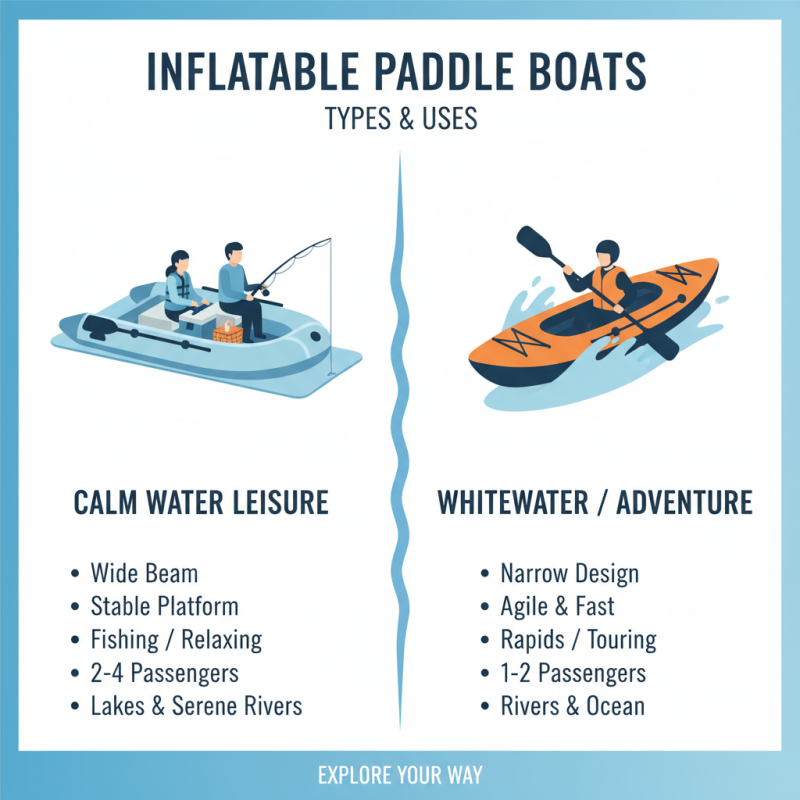
When exploring types of inflatable paddle boats, it’s essential to recognize their various designs and functions. Some models are tailored for calm water, perfect for leisurely afternoons on serene lakes. These boats often feature wider beams, offering stability for fishing or simply enjoying nature. They can comfortably accommodate two to four passengers.
Others are designed for whitewater adventures. These boats are typically more rugged, constructed from durable materials to withstand rough conditions. Look for a model that features reinforced seams and secure handles. A good choice will ensure your safety as you navigate through rapids.
There are also specialty paddle boats intended for specific activities. For instance, a sail-ready inflatable can enhance your experience on windy days. Consider what activities interest you most when choosing your boat. It's crucial to balance your needs with the boat's capabilities. Remember, finding the right fit can take some time and trial. Keep an open mind and don't hesitate to reflect on your experiences to make better choices in the future.
Key Features to Consider When Selecting an Inflatable Paddle Boat
When selecting an inflatable paddle boat, consider weight capacity. Many models can support 400 to 600 pounds. Look for one that fits your group size. Remember, extra weight affects performance. A boat that's too heavy can be slow or hard to maneuver.
Durability is crucial. Boats made of heavy-duty PVC or nylon withstand rough water. Research shows that products with more than three layers last longer. UV resistance is another factor. It prevents damage from sun exposure, ensuring longevity. However, some boats may still develop wear over time. Always check for repairs or replacements.
Portability is essential for adventures. Many inflatable models fold up compactly, which is convenient for transport. Look for lightweight options, ideally under 40 pounds. This makes carrying easier. Some designs include carrying handles that add extra convenience. Yet, this feature can sometimes lead to uncomfortable grips. Quality straps can enhance comfort but may wear out quickly. Keep these details in mind as you choose your ideal inflatable paddle boat.
Comparison of Key Features in Inflatable Paddle Boats
Comparing Material Durability and Weight Capacity in Paddle Boats
When selecting an inflatable paddle boat, two critical factors stand out: material durability and weight capacity. The material directly affects how long the boat will last. Common materials include PVC and Hypalon. PVC is usually lighter but may not withstand harsh conditions. Hypalon offers better UV resistance and puncture protection. It tends to be heavier but might be worth the added weight for serious adventurers.
Weight capacity is another essential consideration. A boat rated for three people might feel cramped with that many passengers. It is vital to check how much gear can be taken along. Some boats may list higher capacities but may not perform well when loaded. The boat's stability and comfort level can decrease significantly if overloaded.
Think about the types of adventures planned. Lakes, rivers, or ocean waters each present unique challenges. A more durable boat might be needed for rocky rivers. However, if weight is a concern, remember that flexibility in choice is often limited. Careful planning and honest assessment of needs are essential to ensure a satisfying experience on the water.
Assessing Stability and Performance in Different Water Conditions
When choosing an inflatable paddle boat, stability is crucial. A stable boat allows for smooth navigation in various water conditions. Look for wider hull designs. These generally provide better balance. A wider base reduces the risk of tipping over. In choppy waters, this balance becomes even more important. The boat should feel secure as you paddle.
Performance also varies with water conditions. Calm lakes demand less from your craft. In contrast, rivers with currents require more control. A boat with adjustable fins or rudders can enhance maneuverability. It assists in steering against unpredictable waves. Take note of your skill level. Beginners may struggle with complex designs.
Do not overlook weight capacity. A heavier load impacts performance negatively. Consider how much gear you bring. Some inflatable paddle boats become sluggish when overloaded. It's essential to test your boat beforehand. A quick spin can reveal comfort and handling in real conditions. Reflect on how it performs and whether it meets your adventure needs.
Tips for Maintenance and Care of Your Inflatable Paddle Boat
Proper maintenance of your inflatable paddle boat is essential for maximizing its lifespan and performance. Regularly inspect for any leaks or punctures. A small tear can become a big problem if overlooked. Use a patch kit designed for inflatables to fix minor issues. Always check seams and valves, as these are common failure points.
Cleaning your paddle boat after each use will help prevent the buildup of grime, algae, and mold. Rinse it with fresh water, especially after a saltwater outing. Avoid abrasive cleaners; they can damage the material. After cleaning, dry the boat completely. Fold and store it in a cool, shaded space. Extreme temperatures and direct sunlight can ruin the material over time.
Keep an eye on your inflation levels. Under-inflation or over-inflation can affect performance and safety. Use a reliable pump and check the inflation regularly. Make a habit of this after each trip. Finally, always refer to the manufacturer's guidelines for specific care tips. This will help you better understand your boat's needs and avoid common pitfalls in care.